
Traffic noise raises BP, harms mental health | Lucknow News
Lucknow: Traffic noise is often seen just as an irritation or a risk to hearing, but a new study by KGMU found that long-term exposure can harm mental health, raise blood pressure, increase stress and reduce quality of life.The study, conducted by the community medicine department on city drivers and published in the Dec issue of medical journal ‘Noise and Health’, examined the non-acoustic effects of noise, including increased anxiety, depression, stress, sleep disturbance and changes in BP.
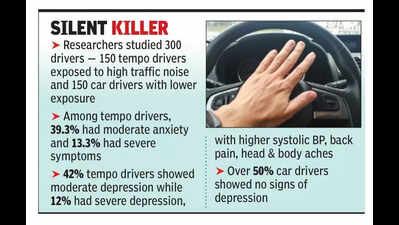
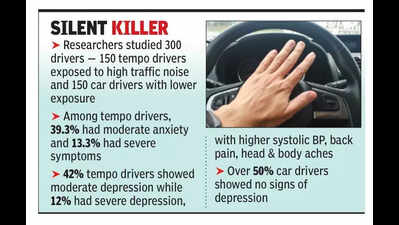
Researchers studied 300 drivers—150 tempo drivers exposed to high traffic noise and 150 car drivers with lower exposure. Noise levels were measured on 3 busy old city routes, and drivers underwent health check-ups and mental health assessments. Among tempo drivers, 39.3% had moderate anxiety and 13.3% had severe anxiety while 42% showed moderate depression and 12% severe depression. In contrast, over half of car drivers showed no signs of depression, and none suffered from severe depression. “Our study shows that noise pollution affects not only the ears but also the brain, heart, and emotional well-being. These results show a strong link between constant traffic noise and mental health problems,” said Prof Manish Kumar Manar, principal investigator and faculty at KGMU’s community medicine. Prof Manar added that drivers exposed to higher noise levels were more anxious and depressed. The study also found that tempo drivers scored much lower in physical health, psychological well-being, environmental comfort and overall quality of life while car drivers performed better in almost all these areas. “Noise exposure slowly reduces a person’s quality of life. The damage is gradual but serious,” said Neeraj Kumar Singh, another researcher. Besides, tempo drivers were found to have higher systolic BP, though no major difference was seen in diastolic pressure. Researchers warned that long-term noise-related stress could increase the risk of heart diseases. Many tempo drivers also reported back pain, headaches, body aches and breathlessness, highlighting physical strain. Noise levels inside tempos were recorded at 84-86 decibels, compared to around 74 decibels inside cars. Experts noted that even a 10-decibel increase can double the harmful impact when exposure is prolonged. The study also found higher use of tobacco products and alcohol among tempo drivers, which researchers said may be a coping response to constant noise and long working hours. Highlighting the wider public health impact, researchers said road traffic contributes nearly 78% of urban noise pollution, putting drivers, traffic police and roadside workers at the highest risk. “Noise pollution should be treated as a serious public health issue, not just an environmental problem,” said co-author Shailza Verma.