IIM-L study highlights post-temple ‘economic renaissance’ in Ayodhya | Lucknow News
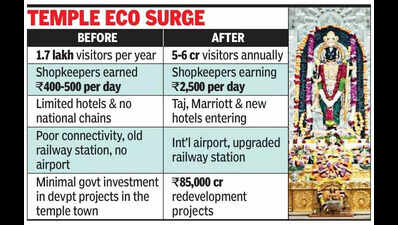
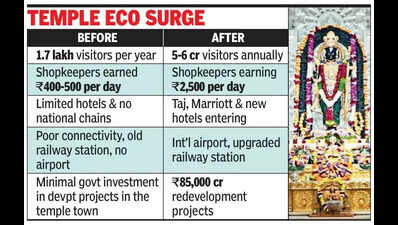
Lucknow: From an average 1.7 lakh annual visitors before the opening of the Ram Temple in Ayodhya to almost 11 crore in the first six months after the consecration in 2024, the surge of religious tourists has led to an economic renaissance in the holy city, says an extensive study by the IIM Lucknow. The study has found that the average income a common shopkeeper of the temple town has gone up by almost five times — from Rs 400-500 to Rs 2,500 per day while real estate prices have risen by 25-40% in the city, and five to 10 times near the temple. While the city has generated Rs 400 crore as GST revenue, the study projects Rs 10,000 crore annual revenue from tourism.
Led by Venkataramanaiah Saddikuti, professor from the operations and supply chain management at IIML and UP’s govt economic advisor, KV Raju, the study titled ‘The Economic Renaissance of Ayodhya, India: A Case Study on Sri Ram Mandir’ further states that there has been a significant growth in Ayodhya’s hospitality sector, driven by increased tourism following the inauguration of the Shri Ram Mandir. The number of hotel rooms has increased from 3,500–4,000 in 2020 to over 5,000 in 2025, with projections indicating a requirement of 8,500–12,500 branded rooms by 2031 to accommodate the anticipated tourist influx. “Spiritual heritage, when aligned with leadership and strategic planning, becomes a powerful engine of economic renewal,” said Saddikuti.The study says that the economic activity that surged post temple construction led to 11 crore visitors only in the first half of 2024, surpassing pilgrimage centres like Varanasi and others.In Jan 2024 alone, more than 2.5 crore tourists visited the temple. The study projects an annual tourist footfall of about 5 to 6 crore by 2025-26 and expects annual revenue from tourism to cross Rs 10,000 this fiscal.Highlighting the Ayodhya city infrastructure and services, the study shows that from 200 restaurants in 2021, there are now 2,000 restaurants. The number of rickshaws has gone up to 17,000 in 2025 from 500 in 2021. The jewelry shops have increased from 3 to over 20 now, and the banks have gone up by four times, from 15 in 2021 to 60 in 2025.Prior to 2021, the city had 150 clothing shops that are now 500 plus, the study shows. Tailors have doubled, from 54 to 102. With zero homestays in 2021, the temple town now has 1136 homestays. The city now has 653 sweet shops as compared to 200 in 2021.